

Brain Fog is Not Normal
August 13th, 2026

It happens to all of us. You’re in the middle of a story when all of a sudden you completely lose your train of thought mid-sentence. Or maybe you’re reading a book, and you find yourself re-reading the same paragraph over and over. Most of us have experienced walking into a room and wondering what made us walk in there in the first place and what was even needed from the room! These experiences lead us to wonder if our brain is simply “buffering”.
When our brain “buffers,” we tend to excuse ourselves with one of two default explanations. There is the ever-popular favorite explanation of simply getting older and starting to perhaps lose a few marbles, or the other explanation of needing more sleep, discipline, willpower, or the thought of not drinking enough coffee.
However, here is the truth about brain fog or brain “buffering”. It is not a personality flaw or an inevitable part of aging. In actuality, brain fog is a downstream symptom of what is actually occurring at the cellular level, including nutrient depletion, oxidative stress, and mitochondrial strain.
What Brain Fog Actually Is
The term brain fog isn’t a medical diagnosis alone. While a troubling feeling, it is a common one that many people experience. While brain fog can be different for everyone, the general cluster of symptoms includes slow recall, trouble concentrating, trouble finding words, mental fatigue, and an overall sensation of feeling disconnected or “foggy”.
It’s important to understand that brain fog is not a personal failing but instead a common, shared modern health problem. With brain fog being a common occurrence, the good news is that the cause is common as well.
Why Modern Life Creates the Perfect Storm for Brain Fog
There are three converging root causes of why modern life is currently creating the perfect brain fog storm.
Since the 1940s, soil mineral density has declined significantly according to USDA comparative crop data. This means that even diets that are calorie-sufficient and should be considered “healthy” are in many cases considered to be micronutrient-light. Specific deficiencies in magnesium, zinc, and B vitamins are thought to be the most well-documented and common.
Oxidative stress can also contribute to brain fog. This occurs from an increased oxidative burden on cells, including brain cells. What causes this to occur? Modern exposures such as chronic stress, heavy environmental loads, or screens all contribute to oxidative stress.
Mitochondrial strain occurs when cellular energy production is compromised. The brain is known for being one of the most energy-hungry organs in the body, and cognitive clarity can be one of the first things affected. Mitochondrial function is believed to decline progressively starting around age 30, which can cause brain fog to creep in, with people confusing it with an unavoidable decline that occurs with aging. However, this is much more of a nutrient- and lifestyle-responsive factor and truly not an unavoidable decline.
The Stress-Nutrition Cycle
Stress and nutrition are a two-way relationship. Chronic stress is known to deplete magnesium, B vitamins, zinc, and vitamin C more quickly than most people can replenish them.
These nutrient deficiencies work together to worsen the stress response in the body, which in turn creates a feedback loop. The more stress the body experiences, the more nutrients it depletes, which in turn creates more brain fog.
When experiencing brain fog, many people feel both wired and tired, which they often associate with brain fog. In actuality, they may be experiencing cortisol dysregulation, which occurs from a lack of nutrients.
Key Nutrients Linked to Mental Clarity
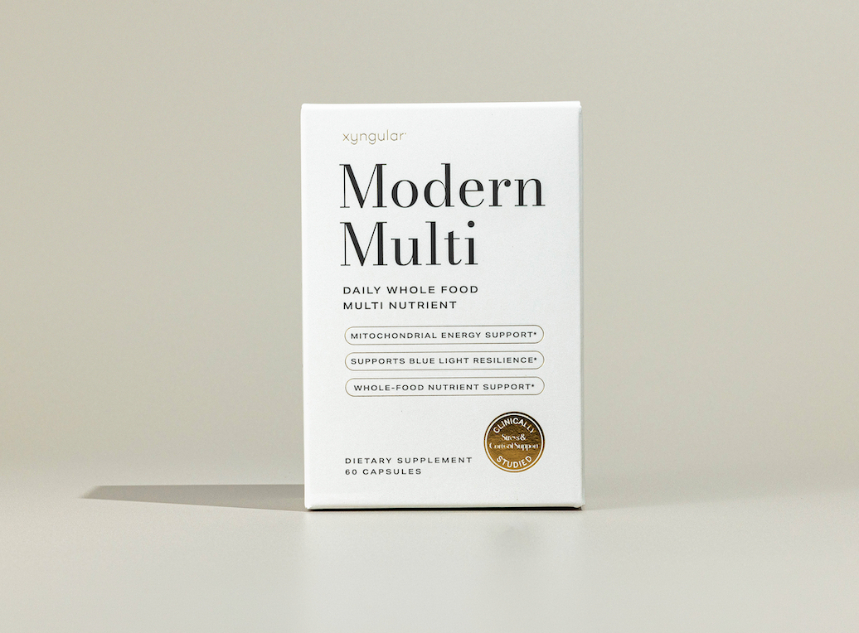
Modern Multi is built on a formulation of pillars that nutrient researchers have studied and believe to be in connection with cognitive and cellular function. This unique formulation includes the following key nutrients:
B vitamins and folate (5-MTHF) are both involved in neurotransmitter formation and energy metabolism.
Magnesium is a foundational cofactor for the nervous system and metabolic function and is also one of the most common shortfalls in modern diets.
Zinc is relevant to cognitive and immune function and is also known for being commonly depleted by chronic stress.
CoQ10, PQQ, Alpha Lipoic Acid, and Acetyl-L-Carnitine all cross-link to the Mitochondrial Resilience pillar, which is relevant to cellular energy production, which ultimately underlies mental clarity and focus.
Choline has been studied both in relation to cognitive function and methylation.
Adaptogenic support, also known as ashwagandha, has been studied in relation to the body's stress response.

How Modern Multi Addresses the Root Cause
It’s important to remember that brain fog is very rarely a single-nutrient problem. It’s much more likely to be an accumulation of several small nutrient gaps that have compounded over time, including minerals, B vitamins, cellular energy cofactors, and also stress-related depletion.
Modern Multi offers a simple, formulated solution designed to address multiple root-cause categories at once. It’s not specifically a brain fog treatment, but a way to address whole-food nutrient repletion, mineral restoration, mitochondrial cofactors, and stress-nutrient support needed that can all ultimately be connected to the reasons why brain fog can occur.
Modern Multi offers empowerment to help understand the reasons why brain fog may be occurring, what is causing the symptoms, and a simple and foundational way to address the problem.
FAQ Section
What causes brain fog?
Brain fog is a downstream symptom of what is actually occurring at the cellular level, including nutrient depletion, oxidative stress, and mitochondrial strain.
Is brain fog a sign of nutrient deficiency?
Brain fog is often caused by cortisol dysregulation, which occurs from a lack of nutrients.
Can stress cause brain fog?
Chronic stress can deplete nutrients faster than people are able to replenish them in their bodies. These nutrient deficiencies work together to worsen the stress response in the body. The more stress the body experiences, the more nutrients it depletes, which in turn creates more brain fog.
Is brain fog just a normal part of aging?
Not necessarily. While people may be quick to assume that their brain fog is a normal part of aging, it is often tied to nutrient deficiencies and has the ultimate ability to be managed.
What nutrients help support mental clarity?
B vitamins and folate, magnesium, zinc, CoQ10, PQQ, Alpha Lipoic Acid, Acetyl-L-Carnitine, Choline, and Adaptogenic support are all thought to help support mental clarity.
The New Normal
Your normal doesn’t have to include brain fog. Modern Multi offers a foundational daily step toward bridging the nutrient gap and addressing cellular-level factors that so many people experience to heal deficiencies. Building a resilient nutritional foundation over time benefits the body and mind in countless ways. Order Modern Multi today and begin your journey to nutritional restoration.