

Mitochondrial Health Explained: Why Your Cells Hold the Key to Lasting Energy
August 13th, 2026

Ever feel like you’re going through life at warp speed? We’ve all felt that drag of energy by mid-afternoon when every single minute is scheduled. It can be tempting to turn to caffeine to function. Life is busy. It requires alert minds and fast-paced processing. This requires energy–lots of it! And for that, mitochondrial health is of supreme importance.
Sustained energy is cultivated at the cell level, within the mitochondria. If you are searching for sustained energy to get you through every day, you need to dive into cellular health. The hero of that story is the mitochondria–the energy-producing part of each cell. Sustained fatigue often starts at the level of the mitochondria long before it shows up as a feeling.
What Are Mitochondria, and Why Do They Matter?
The mitochondria are tasked with converting nutrients from the food we eat into biological energy–ATP. Nearly every cell in the body (apart from red blood cells) contains mitochondria. Cells with the biggest energy needs (think: heart, muscles, and brain) contain hundreds to thousands of mitochondria per cell. If that weren’t enough, mitochondria also multitask and help regulate essential cellular processes like growth, communication, stress response, and programmed cell death (apoptosis), making them an essential team player when it comes to keeping cells functioning efficiently.
Why Mitochondrial Function Naturally Declines
Mitochondria are efficient and complete their tasks remarkably well, but their performance and efficiency can decline over time as we age. This happens naturally, starting around the age of 30. When mitochondrial function declines, it produces less energy, which is why you might feel more fatigued as you age. This decline in mitochondrial function can also be influenced by factors like oxidative stress, which can damage cellular components, and inadequate consumption of the vitamins and minerals mitochondria need to convert nutrients into energy. Lifestyle factors like poor sleep, exposure to environmental toxins, chronic stress, increased sedentary habits, and a diet of highly-processed foods can place heavy demands on the mitochondria as it tries to keep up with energy demands while being undercut by lifestyle factors that undermine its efforts. Clearly, persistent low energy isn’t always about just pushing through or willpower. It’s more biological than psychological. Persistent fatigue can be a cellular-level signal that you’re not getting the nutrients and cellular support your mitochondria need to sustain healthy energy production.
How Nutrition Supports Healthy Cellular Function
At a foundational level, nutrient researchers associate the following nutrient groups as cofactors that support mitochondrial and cellular energy:
- Active B vitamins — cofactors in core energy metabolism pathways
- CoQ10 (ubiquinol form) — involved in electron transport chain efficiency
- PQQ — currently studied for a possible role in mitochondrial biogenesis (new mitochondria formation)
- Alpha Lipoic Acid (ALA) — antioxidant that can counteract oxidative stress
- Acetyl-L-Carnitine — involved in transporting fatty acids into mitochondria
- Magnesium — a cofactor for building mitochondria and broader metabolic function

Why "Whole-Food" and Bioavailable Nutrient Forms Matter
Getting the right type of nutrients is just one side of the coin. The other side deals with bioavailability, or how well a nutrient is absorbed and used. You can give your body whole foods, but if it is unable to absorb those nutrients efficiently, all your hard work is undermined. This is why formulation quality matters.
Vitamins and minerals come in different forms that can impact how they are absorbed, and formulation should be an important consideration when choosing vitamins and mineral supplements.
Modern lifestyles make meeting your nutrient needs more challenging. Factors like highly processed diets, soil mineral depletion, the increase of sedentary lifestyles and work, aging, and chronic stress can all affect how we obtain the right type of nutrients and their bioavailability.
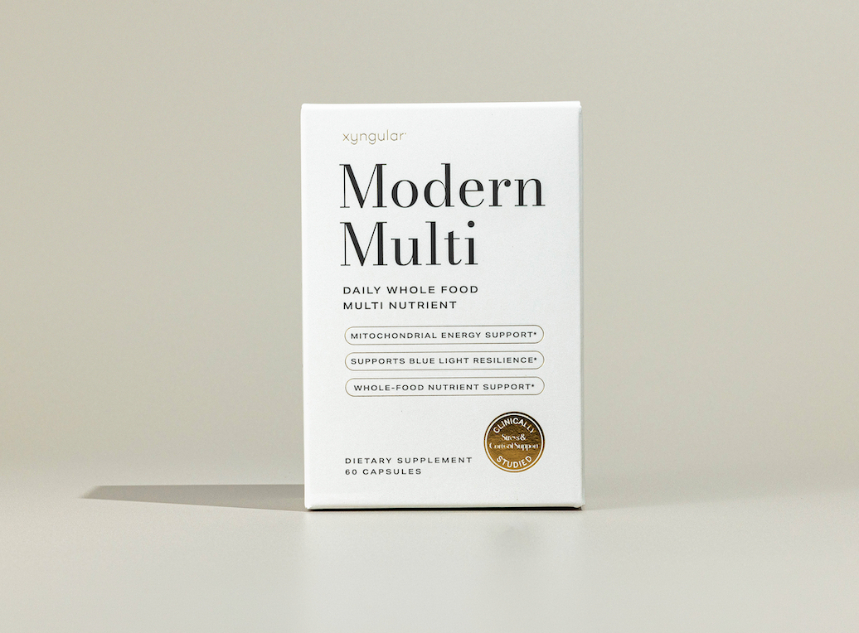
Modern Multi uses whole-food ingredients, alongside researched nutrient forms (ubiquinol, CoQ10, and magnesium in bisglycinate/malate forms) to support everyday nutrition and sustained energy. For many brands, multivitamins are made in a lab — ours starts in a field, just like nature intended.
FAQ Section
What is mitochondrial health, and why does it matter?
Mitochondrial health is the efficiency with which your mitochondria can convert nutrients into ATP–the energy your cells use to function. Healthy mitochondrial function is a key factor in energy production and also plays a role in regulating cellular processes like metabolism, stress response, and overall cellular function.
What causes poor mitochondrial function?
Two factors contribute to a decline in mitochondrial function: age and lifestyle habits. Mitochondrial function naturally begins to decline at age 30. Poor mitochondrial function is also influenced by oxidative stress, chronic illness, poor sleep, inadequate nutrition, physical inactivity, and exposure to environmental factors.
Can nutrition really support mitochondrial health?
Yes. The mitochondria rely on vitamins, minerals, and other nutrients to produce energy. A balanced diet and healthy aging supplements can support normal mitochondrial function.
What is the difference between mitochondrial health and general energy levels?
General energy levels are influenced by many factors. Feeling tired doesn’t necessarily mean that your mitochondria are not functioning well. Mitochondrial health describes how efficiently your cells can produce energy.
How do I know if my fatigue is nutrition-related?
Fatigue can have many causes. However, if fatigue is persistent or severe, it’s important to speak to a healthcare professional about possible underlying causes, which might include nutrition-related causes.
Build Your Cellular Health Foundation
Build your cellular health foundation by focusing on the basics: whole food nutritional support that’s efficiently absorbed. Because your mitochondria are a big part of foundational cellular health, it makes sense to feed them the right type of bioavailable nutrients. Mitochondria rely on a variety of vitamins and minerals to produce energy, and getting an adequate supply of the right vitamins and minerals has proved challenging in our modern era.
Modern Multi was designed to fill the common nutritional gaps created by our modern lifestyle with a whole-food, bioavailable approach that supports the nutrients your body needs for long-term vitality and healthy aging.