

What Modern Nutrition Is Missing (And Why A Standard Multivitamin Won't Fix It)
August 13th, 2026
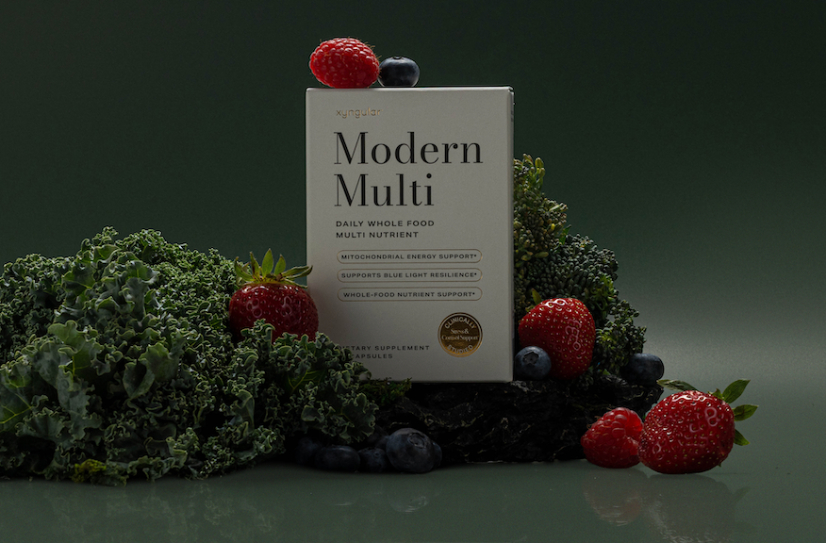
Are you already taking a multivitamin yet continue to feel foggy, tired, stressed, and depleted? It’s a common complaint. The multivitamin category hasn't materially changed in 30+ years, while daily life has changed dramatically during that same time period. If you’re feeling off, it’s because most multivitamins on the shelf are still solving yesterday's problem.
These lifestyle changes directly affect wellness, and the old multivitamin of the past no longer makes the cut. Today's health pressures (screens, soil depletion, chronic stress, longer lifespans) require a fundamentally different modern nutrition formulation than the one designed decades ago.
Why Multivitamins Haven't Changed Since the 1990s
Multivitamin formulation hasn’t changed much since the 1990s. From the 1930s-1940, vitamins were primarily formulated to prevent severe deficiencies, like scurvy or rickets. By 1941, Recommended Dietary Allowances (RDAs) were introduced as a nationwide benchmark. The introduction of the RDAs encouraged vitamin manufacturers to create standardized multivitamins in mass-market formulas that emphasized stability, shelf life, and overall affordability.
Targeting overall nutrient deficiencies via a multivitamin made sense then, and it still makes sense today. However, the multivitamin formulation of your parents' generation categorically ignored oxidative stress, increased cellular energy demand, and nutrient forms the body could absorb well (bioavailable).
Today, we are seeing a huge shift toward multivitamins made from natural, high-quality, bioavailable ingredients. Most standard multivitamins still lean on synthetic isolates and inexpensive mineral forms (e.g., oxides) chosen for cost and shelf life, not necessarily absorption or quality.
The Modern Nutrient Reality of 2026
The reality of today’s nutrient is under attack from the following sources:
- Screens & blue light: adults average 7–10 hours of daily device exposure, a category of stress that didn't exist when multivitamin formulations were standardized.
- Soil depletion: since the 1940s, soil mineral density has continuously declined, meaning even a calorie-sufficient, "clean" diet could still be micronutrient-light.
- Chronic stress: modern life keeps cortisol elevated longer, which in turn depletes key nutrients (magnesium, B vitamins, zinc, vitamin C): ~68% of adults don't meet magnesium intake recommendations; ~42% of U.S. adults have vitamin D insufficiency. The truth is chronic stress is a nutrient-depleting force, not just an emotional state.
- Longer lifespans: people are living longer and expecting to remain functional longer, shifting the goal from "avoid deficiency disease" to "support long-term cellular and metabolic resilience." Additionally, mitochondrial function is understood to decline progressively starting around age 30.
Why "Preventing Deficiency" Isn't the Same as "Supporting Resilience"
To prevent a deficiency, you must consume the bare minimum of any wellness vitamin or mineral. In the 1940s, a whole food diet would typically clear this bar quite easily. In today’s world, it’s important to also consider if your daily nutrient intake is aligned with what today's stressors actually demand.
Is preventing deficiency the same thing as supporting resilience? While they are related, supporting long-term health and preventing nutrient deficiency is not the same thing. To avoid deficiency, you must consume enough nutrients to meet the minimal requirements. A resilience-focused approach asks whether your daily intake can consistently support your body’s normal cellular functions with the increased demands modern life places on it.
What a Nutrition Product Built for Today Actually Requires
While it’s easy to see that our modern world requires higher nutrition needs, it can be overwhelming to find a multivitamin formulated to meet today’s demand. When considering the next generation of multivitamin, use this checklist to make sure it can handle today’s increased nutrient requirements:
- Protection against digital-age oxidative stress (blue light exposure)
- Whole-food nutrient forms the body recognizes and can absorb well
- Mineral repletion that accounts for depleted modern soil
- Support for cellular energy production, since fatigue and mental fog are common modern complaints
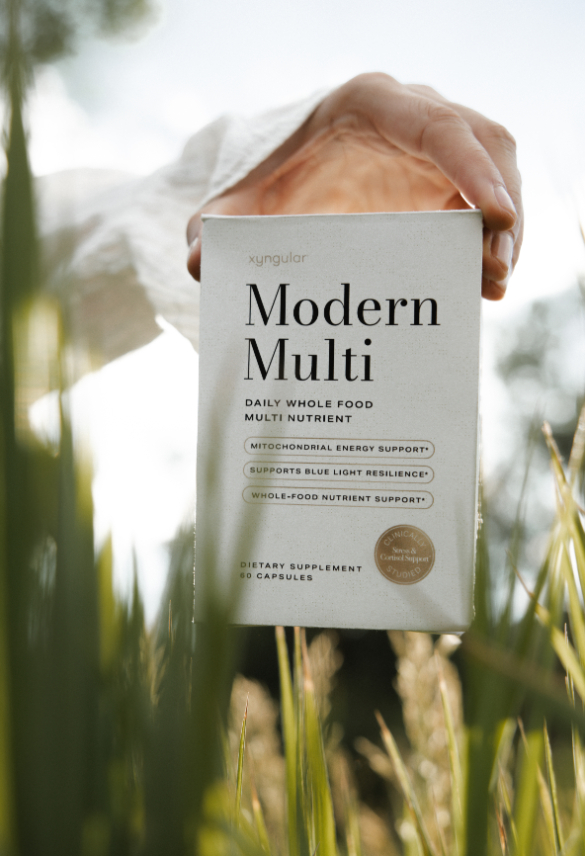
Introducing Modern Multi: Formulated for the World We Actually Live In
Reach for the modern multivitamin formulated for the world we live in. Most multivitamins are made in a lab. Modern Multi starts in a field.
Modern Multi was formulated for the person navigating blue light, chronic stress, soil depletion, metabolic strain, and longer lifespans, and was formulated for the world we're actually living in, not formulated using 1990s outdated nutritional science.
Our formulation follows the five formulation pillars: Blue Light Defense + Eye Longevity, Whole-Food Vitamin Repletion, Mineral Restoration, Mitochondrial Resilience + Energy Signaling, and Stress/Hormone/Longevity Support.
Traditional Multivitamin Approach vs. Modern Multi's Approach
- Traditional brands use synthetic isolates; Modern Multi uses whole-food and bioactive nutrient forms
- Traditional brands use inexpensive mineral forms (e.g., oxides); Modern Multi uses chelated, bioavailable mineral forms
- Traditional Multivitamins offer no dedicated blue-light or mitochondrial support; Modern Multi offers targeted cofactors (Lutein and Coenzyme Q10) for both
- Traditional brands offer a generic, one-size-fits-all formulation; Modern Multi is built around today's specific lifestyle pressures
FAQ Section
Why do I still feel tired/foggy even though I take a multivitamin?
A multivitamin can absolutely fill a nutrient gap or deficiency, but energy levels are strongly influenced by factors like bioavailability, sleep, stress, activity, diets high in processed foods, and overall cellular health.
How is Modern Multi different from a standard multivitamin?
We use whole-food ingredients and nutrient forms with high bioavailability that support energy metabolism and long-term vitality, formulated to meet today’s modern lifestyle.
Has multivitamin formulation changed much over the past few decades?
Next-generation multivitamins use bioavailable nutrient forms, whole foods, and include ingredients specifically cultivated to meet today’s modern nutrient demands.
What does "whole-food" multivitamin actually mean?
Whole-food means that the nutrients are sourced from natural food, not isolated synthetic ingredients.
Is a more targeted multivitamin actually necessary, or is this marketing?
While we are all exposed to today’s modern lifestyle that puts a strain on effective nutrient consumption, not everyone may need a targeted formula. While deficiency might not be a concern for some, everyone should prioritize a daily wellness routine that supports whole-body nutrition and long-term cellular health.

The Next Generation Of Multivitamin Support
The world has evolved since the first multivitamin was created in the 1940s. You can’t afford to ignore today’s modern nutritional considerations of increased blue light exposure, chronic stress, and a sedentary lifestyle, coupled with longer lifespans, if you want to maintain optimal cellular health and support healthy aging.
Today's body is dealing with a different set of nutritional challenges, and Modern Multi was built to match that reality. Our formula uses whole foods and carefully selected nutrient forms that support the body’s everyday cellular needs.